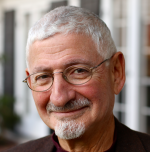
I have only been seriously interested in economics for the past two years – despite having been a student, majoring in physics, at the University of Chicago for most of the 1960s, – the home of the Chicago School, one of the most influential schools of economics in the world over the last sixty years.
My new interest was sparked in part by the work I have been doing over the past few years on complex systems, especially in market-facing complex systems involving people and services; and in part by my attempts to understand the underlying causes of the global financial crisis, the worst since the Great Depression.
What caused the crisis? There are clearly no simple answers. There is plenty of blame to go around. But, while not condoning it, it is not difficult to understand the greed, temptations and short-term pressures of those in the financial industry, as well as the anti-government ideology of regulators and government officials over the last few decades. But I have higher expectations from the research and academic communities, and continue to ask myself how so many of our best and brightest, including a number of Nobel Prize winners, could have failed to anticipate a crisis of this magnitude.
Then a few weeks ago I read an excellent article by Paul Krugman in the NY Times Magazine, “How Did Economists Get It So Wrong?,” that directly addresses this question. In the article’s tag line, Krugman writes: “The Great Recession was the result not only of lax regulation in Washington and reckless risk-taking on Wall Street but also of faulty theorizing in academia. Can economists learn from their mistakes?”
Professor Krugman believes that few economists, saw the financial crisis coming because of their conviction that markets are inherently stable with no possibility for the kind of catastrophic collapse that we saw last year. He writes that “the economics profession went astray because economists, as a group, mistook beauty, clad in impressive-looking mathematics, for truth.” They are in love with an “idealized vision of an economy in which rational individuals interact in perfect markets . . .gussied up with fancy equations.”
“Unfortunately,” he adds, “this romanticized and sanitized vision of the economy led most economists to ignore all the things that can go wrong. They turned a blind eye to the limitations of human rationality that often lead to bubbles and busts; to the problems of institutions that run amok; to the imperfections of markets – especially financial markets – that can cause the economy’s operating system to undergo sudden, unpredictable crashes; and to the dangers created when regulators don’t believe in regulation.”
Krugman’s article offers a very good tutorial about the two main 20th century schools of macroeconomics – the study of the behavior and decision-making of entire economies.
One school was championed by British economist John Maynard Keynes. Keynesian economics, first formulated in the 1930s during the Great Depression, advocates a predominantly private sector economy but with a large role for government and the public sector, as required – a mixed economic model. Prof Krugman says about Keynes:
“He wanted to fix capitalism, not replace it. But he did challenge the notion that free-market economies can function without a minder, expressing particular contempt for financial markets, which he viewed as being dominated by short-term speculation with little regard for fundamentals. And he called for active government intervention – printing more money and, if necessary, spending heavily on public works – to fight unemployment during slumps.”
Of particular relevance to our present crisis, Keynes criticized those in financial markets whose key objective is short-term speculation in order to make as much money as possible, as opposed to investing in the real economy, that is, the economy of production capital, long-term investment and job creation. “When the capital development of a country becomes a by-product of the activities of a casino, the job is likely to be ill-done.”
The other major school is neoclassical economics, first formulated in the 19th century. It is based on the premise that given all relevant information, people will make rational decisions to maximize their utility and profits. It believes that markets on their own will just about always achieve the right results, and that government intervention in markets is almost always a bad idea.
Faith in neoclassical economies and its theories were shattered in the 1930s by the Great Depression. This gave rise to the more pragmatic, mixed-model Keynesian economics, which dominated economic thinking for the next forty years or so. But starting in the 1970s, Keynesian economics started to fall out of favor, with the return to neoclassicism led by Milton Friedman and the Chicago School, with its advocacy of a nearly universal trust in markets and a very limited, circumscribed role for government.
This anti-Keynesian counterrevolution took hold not just in academia, but in governments around the world, especially in the UK, when Margaret Thatcher became prime minister from 1979-1990, and in the US, when Ronald Reagan became president from 1981-1989. The mood of the times is perhaps best captured by President Reagan’s famous phrase in his first inaugural address: “Government is not the solution to our problem; government is the problem.”
Over the next thirty years, this phrase became ingrained in a large segment of our country, including its political leadership. It was supported by the intellectual foundation and respectability of the Chicago School and its disciples around the world. Alan Greenspan, the Chairman of the Federal Reserve from 1987-2006, presided over this new economic order.
Even when the financial system was showing signs that perhaps all was not well, Greenspan continued to hold on to his beliefs that derivatives and other financial instruments were extraordinarily useful in distributing risks, thus lessening the need for regulating the increasingly complex financial markets. “Not only have individual financial institutions become less vulnerable to shocks from underlying risk factors, but also the financial system as a whole has become more resilient,” he said in 2004. It wasn’t until October of 2008 that, in Congressional testimony, Greenspan finally acknowledged that he was partially wrong in opposing regulation. He said: “Those of us who have looked to the self-interest of lending institutions to protect shareholder's equity – myself especially - are in a state of shocked disbelief.”
The most recent issue of the University of Chicago Magazine examined the role of the Chicago School in the financial crisis and ensuing global recession. Is Chicago School Thinking to Blame?, asks the article written by Chicago alumnus Michael Fitzgerald. In a nicely balanced article, Fitzgerald writes that the old pillars of the Chicago school have a “near disdain for government.” He cites a meeting this past May in which Professor Kevin Murphy said, talking about the remaking of General Motors: “Who in their right mind would put the government in charge of that task?” Murphy’s remark elicited applause from the audience. Fitzgerald then adds:
“Another crowd might have booed – say, at Columbia University, current home of economist Joseph Stiglitz, who won the
2001 Nobel Prize for work on how markets misfire. Stiglitz threw this bomb via a Bloomberg News article last winter: ‘The Chicago School bears the blame for providing a seeming intellectual foundation for the idea that markets are self-adjusting and the best role for government is to do nothing.’”
Fitzgerald also cites comments by Andrew Leonard in an April 29 column in Salon: “The direction in economic thought pioneered by Milton Friedman and enthusiastically adopted by Ronald Reagan and his Republican successors helped to get us where we are today – in the worst economic contraction in 50 years, characterized by an increasing concentration of wealth in the top tiers of society.”
It is important to point out that while University of Chicago economics has been best known for its Chicago School, it is also the home of some of the most eminent behavioral economists, including Richard Thaler and Steven Levitt. Behavioral economists like Thaler and Levitt take a much more pragmatic, empirical approach to the field, including research on human, social, cognitive and emotional factors to better understand how people make economic decisions. Perhaps there is a changing of the guard underway.
Let me offer my own comments about these cosmic battles in the field of economics – from the point of view of a non-economist.
I have been involved in complex systems throughout my professional career – first as a physics student in Chicago in the 1960s; later as a computer scientist focused on very large computer systems, including parallel supercomputing and the Internet; and now with my work in highly complex problems like Cloud Computing, Smart Cities and organizational, people-oriented systems. I have learned that complex systems are non-linear and dynamic, with emergent, unpredictable behaviors, some potentially catastrophic. Therefore, such systems, while not susceptible to rigid or hierarchical control, nonetheless need to be very carefully managed.
I am therefore much more comfortable with the messy Keynesian view, which seems to me more reflective of the realities of the world we live in, than with the elegant neoclassical view. The notion that human beings always make rational financial decisions, which is at the core of most neoclassic economic models, feels naive to me. Looking at those same humans from the point of view of evolution and natural selection, you can appreciate that primal forces like survival and reproduction will trump rational, logical behavior most of the time. This is what behavioral economists are now studying.
We should also keep in mind that these discussions are all centered on the evolution of capitalism beyond the crisis and into the 21st century. As Michael Fitzgerald writes in his Chicago article: “Markets are like Churchill’s view of democracy: a flawed way to run an economy, except for all the other ways we know.” Few advocate the extremes, either state-directed socialism at one end, or laissez-faire capitalism at the other.
Most reasonable people are working along a wide spectrum with free markets at its center. The key question then is to find the right checks and balances between letting markets perform their magic on their own, and intervening when the interests of the larger society require it, so we can end up with a more decent and humane economic world. As I have learned over the last two years, this is one of the most exciting challenges for us all to think through over the next several decades.


